
How one Hollywood makeup artist transformed the way faces appeared on camera—and changed the beauty industry forever.
By Ruby Lipstick | November 3, 2026, Beauty History Series
Long before beauty filters, high-definition cameras, and foundations promising a flawless finish, a makeup artist was working behind the scenes in Hollywood who understood something that would change the beauty industry forever.
Makeup that looks beautiful in person doesn’t necessarily look beautiful on camera.
His name was Max Factor.
Today, we take camera-ready makeup almost for granted. Foundations are formulated to photograph beautifully, powders are designed to control shine, and makeup artists consider lighting, texture, and finish when preparing a face.
But in the early days of Hollywood, none of this was nearly as sophisticated as it is today.
And Max Factor helped change that.
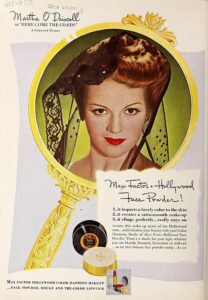
When Theatrical Makeup Met the Motion Picture Camera
Before motion pictures became a major entertainment industry, actors relied heavily on theatrical greasepaint.
Onstage, thick cosmetics, exaggerated contours, and dramatic features served a purpose. Performers needed their expressions to be visible to audiences sitting far away.
The camera, however, presented an entirely different challenge.
It captured details that theater audiences never saw.
Heavy greasepaint could appear unnatural, crack under studio lights, and make actors look more like painted characters than believable people.
Max Factor recognized that the emerging film industry needed makeup specifically designed for the camera.
In 1914, he developed a more flexible greasepaint formulation that could be applied more smoothly and comfortably than traditional stage makeup.
It was an important turning point. Makeup was no longer simply about making a face visible. It was becoming part of the filmmaking process.
Then Hollywood Discovered Color
As filmmaking technology advanced, makeup artists faced new challenges.
Black-and-white films required careful attention to contrast, shading, and how different colors translated into shades of gray.
But color motion pictures introduced a more complicated problem.
Skin tones, makeup pigments, and studio lighting didn’t always translate naturally through early color-film processes. A complexion that looked perfectly acceptable in the makeup chair could appear dramatically different on screen.
Max Factor understood that makeup needed to evolve alongside cinematography.
His solution would become one of the most influential products in modern cosmetics history.
The Invention That Changed Foundation: Pan-Cake Makeup
During the 1930s, Max Factor developed Pan-Cake makeup to address the demands of Technicolor filmmaking.
Unlike the heavy greasepaint traditionally used in theaters, Pan-Cake offered a more even, matte finish suited to the camera.
The Pan-Cake was a pressed cake foundation applied with a damp sponge, allowing makeup artists to build coverage while controlling shine and creating a consistent complexion.
For Hollywood, this was a significant advancement.
Makeup could now work more effectively with the lighting and film technology used to create the increasingly sophisticated color images audiences wanted to see.
And Pan-Cake wasn’t destined to remain exclusively on movie sets.
As audiences admired the polished appearances of Hollywood actresses, the desire to recreate screen glamour at home grew.
Max Factor brought Pan-Cake into the consumer beauty market, helping make a professional screen-makeup innovation available to everyday women.
Hollywood beauty was no longer something audiences could only admire. It was something they could purchase and recreate.
The Makeup Artist Behind the Beauty Brand

What makes Max Factor’s story particularly interesting is that he wasn’t simply a cosmetics entrepreneur.
He was a working beauty professional who understood the relationship between products, technique, lighting, and the finished image.
His work helped establish makeup artistry as both a creative discipline and a technical specialty.
He also understood the importance of color coordination.
His Color Harmony approach encouraged women to consider their complexion, hair color, and eye color when selecting cosmetics.
Today, these ideas may sound familiar. Makeup artists regularly evaluate undertones, color relationships, textures, and lighting before choosing a product.
But a century ago, these approaches helped shape a much more systematic understanding of beauty.
From Pan-Cake to Modern Camera-Ready Makeup
Consider how much has changed.
Today, we have foundations designed for photography, television, film, and everyday wear. We have lightweight complexion products, high-performance pigments, sophisticated powders, and formulas developed to maintain a natural appearance under demanding lighting conditions.
The technology has advanced enormously, but many of the questions makeup artists ask remain surprisingly similar.
How will the product look under lighting?
Will the finish appear natural on camera?
Does the foundation reproduce the complexion accurately?
Will the makeup hold up throughout filming or photography?
These are the same types of problems that inspired Max Factor’s innovations.
Of course, modern cosmetics have also moved beyond the limitations of early Hollywood. Greater attention to diverse skin tones, undertones, and individual beauty has challenged the narrow standards historically promoted by the film industry.
That evolution is just as important as the products themselves.
Why This History Matters
As a makeup artist, I believe understanding beauty history gives us a deeper appreciation for the tools we use.
Every innovation begins with someone recognizing a problem and imagining a better solution.
Max Factor saw a changing industry and developed products to meet its needs.
His legacy reminds us that makeup artistry has never been simply about applying cosmetics.
It’s about understanding faces, light, color, texture, and the way beauty is experienced through an image.
And perhaps most importantly, it’s about knowing when the techniques of yesterday need to evolve for the technology of tomorrow.
Long before we were discussing high-definition foundation or camera-ready complexions, Max Factor was already working to solve those challenges.
And that is a beautiful piece of makeup history worth remembering.


